
- Afrikaans
- Albanian
- Amharic
- Arabic
- Armenian
- Azerbaijani
- Basque
- Belarusian
- Bengali
- Bosnian
- Bulgarian
- Catalan
- Cebuano
- Corsican
- Croatian
- Czech
- Danish
- Dutch
- English
- Esperanto
- Estonian
- Finnish
- French
- Frisian
- Galician
- Georgian
- German
- Greek
- Gujarati
- Haitian Creole
- hausa
- hawaiian
- Hebrew
- Hindi
- Miao
- Hungarian
- Icelandic
- igbo
- Indonesian
- irish
- Italian
- Japanese
- Javanese
- Kannada
- kazakh
- Khmer
- Rwandese
- Korean
- Kurdish
- Kyrgyz
- Lao
- Latin
- Latvian
- Lithuanian
- Luxembourgish
- Macedonian
- Malgashi
- Malay
- Malayalam
- Maltese
- Maori
- Marathi
- Mongolian
- Myanmar
- Nepali
- Norwegian
- Norwegian
- Occitan
- Pashto
- Persian
- Polish
- Portuguese
- Punjabi
- Romanian
- Russian
- Samoan
- Scottish Gaelic
- Serbian
- Sesotho
- Shona
- Sindhi
- Sinhala
- Slovak
- Slovenian
- Somali
- Spanish
- Sundanese
- Swahili
- Swedish
- Tagalog
- Tajik
- Tamil
- Tatar
- Telugu
- Thai
- Turkish
- Turkmen
- Ukrainian
- Urdu
- Uighur
- Uzbek
- Vietnamese
- Welsh
- Bantu
- Yiddish
- Yoruba
- Zulu

Boosting Hydraulic Precision with the Advanced Double Acting Power Unit
Modern hydraulic systems demand high-performance components to ensure responsiveness, reliability, and power delivery. At the heart of this evolution lies the Double acting power unit, a compact yet high-powered solution designed to offer bidirectional fluid control. Whether used in industrial equipment, agricultural machinery, or mobile platforms, this unit provides unmatched control, making it indispensable in modern hydraulic engineering.
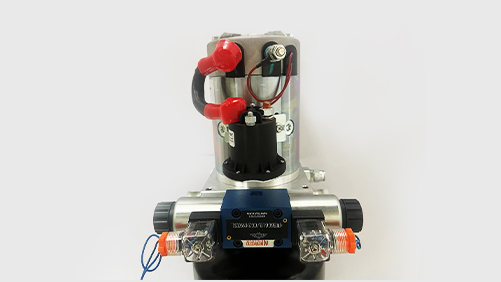
How the Double Acting Power Unit Improves System Efficiency
The primary advantage of the Double acting power unit lies in its ability to exert force in both extension and retraction strokes. Unlike single-acting systems that rely on external forces such as gravity or mechanical springs for one direction, the Double acting power unit uses hydraulic pressure in both directions, thereby delivering consistent and uninterrupted power.
This bidirectional flow capability leads to superior mechanical advantage and reduces idle time. For instance, in lifting and pressing applications, the retraction motion is just as critical as the extension, and this is where the Double acting power unit shines. Machines can return to starting positions faster, complete more cycles per hour, and operate with greater accuracy—translating into higher productivity and less energy wastage.
In industries such as manufacturing automation and heavy lifting, this efficiency improvement is a game changer. The inclusion of a 12v hydraulic power unit also enhances compatibility with mobile systems, enabling remote applications to benefit from the same dual-action advantage.
The Working Principle of the Double Acting Power Unit Explained
At its core, the Double acting power unit consists of a pump, reservoir, motor, and dual-directional control valves. The pump draws hydraulic fluid from the reservoir and pushes it into either side of a double-acting cylinder, depending on valve positioning. When the valve is activated in one direction, fluid enters the cylinder’s cap end, pushing the piston outward. Reversing the valve sends fluid to the rod end, retracting the piston.
This closed-loop configuration ensures that every motion is pressure-driven, unlike gravity-dependent single-acting units. This method guarantees force symmetry, higher control over speed and pressure, and the ability to stop, hold, or reverse action at any point.
When paired with a dc hydraulic power unit, the system becomes compact and energy efficient, ideal for use in battery-powered or off-grid hydraulic applications. The internal relief valves and solenoid controls are key to maintaining safe operating pressures and precise motion, even in variable-load conditions.
How the Double Acting Power Unit Enhances Hydraulic Response Speed
One of the most underrated benefits of a Double acting power unit is its ability to drastically reduce the lag time between control input and mechanical response. In systems where fast reaction is essential—such as in robotics, mobile platforms, and lift gates—the quick switching of directional valves in the Double acting power unit allows immediate fluid redirection, thus reducing operational delays.
Unlike conventional pumps that experience pressure drop during directional shifts, the Double acting power unit maintains pressurization during both strokes. This stability minimizes performance dips and prevents unnecessary energy spikes. Systems with a 20 gpm hydraulic power unit can achieve even faster cycle speeds while managing heavier loads.
Additionally, integrating modern control electronics with pressure feedback loops enhances responsiveness. Whether controlled via joystick, programmable logic controller, or remote signal, the unit translates inputs into immediate, fluid-powered action.
This speed optimization has significant benefits in agriculture, where timing is crucial during harvest or seeding, and in transport systems requiring quick loading and unloading operations.
Selecting the Right DC Hydraulic Power Unit for Your Application
Choosing the appropriate dc hydraulic power unit or 12v hydraulic power unit begins with evaluating system requirements. Key factors include cylinder size, desired flow rate, system pressure, and the duty cycle. A 20 gpm hydraulic power unit is well-suited for applications involving large actuators or frequent repetitive movement, offering high-speed performance with consistent reliability.
For mobile or battery-operated equipment, the 12v hydraulic power unit provides a lightweight and low-voltage solution that does not compromise on output power. These units are ideal for tailgate lifts, truck beds, and off-road utility equipment.
Reputable manufacturers provide modular units that allow for easy integration of components like pressure switches, accumulators, and remote controls. Some advanced models also feature self-cooling mechanisms and brushless motors for longer life and reduced maintenance.
When comparing options, always ensure that the selected Double acting power unit is tested to meet ISO and CE standards, ensuring safety and durability under real-world conditions.
Double Acting Power Unit FAQs
What’s the difference between a single and Double acting power unit?
A single-acting unit provides hydraulic power in only one direction, relying on external forces for retraction. In contrast, a Double acting power unit powers both extension and retraction strokes, providing greater control and efficiency.
Can a 12v hydraulic power unit be used for industrial machinery?
Yes, many mobile and light-duty industrial applications use a 12v hydraulic power unit where portability and DC power are advantageous, especially in remote or battery-powered systems.
How do I choose between a dc hydraulic power unit and an AC unit?
Use a dc hydraulic power unit when mobility, compact size, or low-voltage operation is required. AC units are better for fixed, high-duty cycle industrial equipment with constant access to the power grid.
Is a 20 gpm hydraulic power unit suitable for small-scale equipment?
While powerful, a 20 gpm hydraulic power unit is usually better suited for large-scale or fast-cycle applications. For smaller systems, a lower GPM unit may offer better energy efficiency and control.
How long does a typical Double acting power unit last?
With proper maintenance, including fluid checks and valve inspection, a high-quality Double acting power unit can last 8–12 years, depending on usage frequency and operating conditions.


 Polish
 English
  Afrikaans
  Albanian
  Amharic
  Arabic
  Armenian
  Azerbaijani
  Basque
  Belarusian
  Bengali
  Bosnian
  Bulgarian
  Catalan
  Cebuano
  Croatian
  Czech
Czech  Danish
  Dutch Esperanto
  Estonian
  Finnish
  French
  Frisian
  Galician
  Georgian
  German
  Greek
Greek  Gujarati
  Hebrew
  Hindi
Hindi  Hungarian
  Icelandic
  Indonesian
  Italian
  Japanese
  Kannada
  Kazakh
  Khmer
Khmer  Korean
  Kurdish
  Lao
Lao  Latvian
  Lithuanian
  Macedonian
  Malay
Malay  Malayalam
  Marathi
  Mongolian
  Myanmar
  Nepali
  Norwegian
  Pashto
  Persian
  Portuguese
  Panjabi
  Romanian
  Russian
  Scottish Gaelic
  Serbian
  Sinhala
  Slovak
  Slovenian
  Spanish
  Swahili
  Swedish
  Tagalog
  Tamil
Tamil  Tatar
Tatar  Telugu
  Thai
Thai  Turkish
  Ukrainian
  Urdu
Urdu  Uighur
  Uzbek
Uzbek  Vietnamese
  Welsh
Welsh